The Cliffs of Moher are the most visited natural attraction in Ireland, and for most people staying in Dublin they are also the furthest thing they will attempt in a single day. The trip is entirely doable. It just repays a little planning, because the difference between a good day and a long one comes down to timing, weather and what else you fold into the route.
Overview
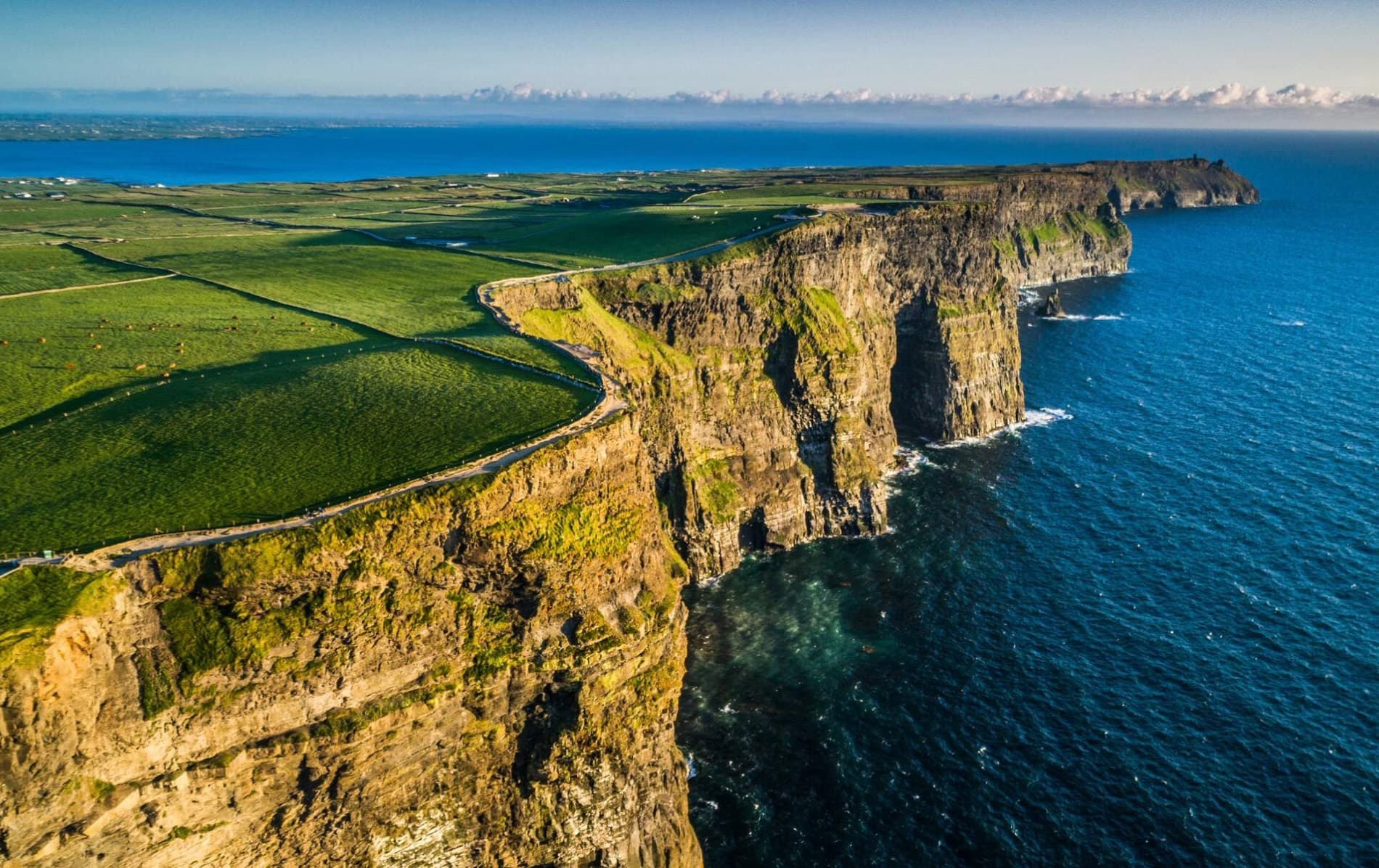
The cliffs run along the Atlantic edge of County Clare, rising steeply from the sea and stretching for several kilometres. O'Brien's Tower stands at the highest point, and on a clear day the view takes in the Aran Islands and, further north, the hills of Connemara.
This guide covers getting there from Dublin, when to arrive, what to bring, and what to combine the visit with so that the driving is worth it.
Getting there from Dublin
The usual route runs west across the midlands and into Clare. It is a straightforward drive on good roads for most of the way, with the final stretch on narrower coastal roads.
Allow roughly three hours each way as a planning figure, and treat that as approximate rather than fixed. Leaving Dublin during the morning peak or returning into it can add a substantial amount of time, which is one of the strongest arguments for an early start.
When to go
The cliffs are open year-round and the site is busiest through the summer months and at weekends. Two things are worth planning around.
- Coach timing. Large tour groups tend to arrive through the middle of the day. Earlier or later visits usually feel noticeably calmer.
- Light and direction. The cliffs face west into the Atlantic, so the afternoon and early evening generally give the better light — and in summer that light lasts a long time.
What to bring
- A properly waterproof jacket. Exposed Atlantic clifftop is a different proposition to Dublin city on the same day.
- Shoes with grip. Paths can be wet, uneven and muddy in places.
- Layers. Wind chill on the clifftop makes it feel considerably colder than the temperature suggests.
- A bag you can close. Wind will take anything loose.
The most common mistake visitors make is dressing for the forecast in Dublin rather than the conditions on the coast three hours west.
What to combine with the cliffs
Visiting the cliffs alone leaves you with six hours of driving for perhaps ninety minutes on site. Adding one or two nearby stops transforms the day without adding much distance.
The Burren
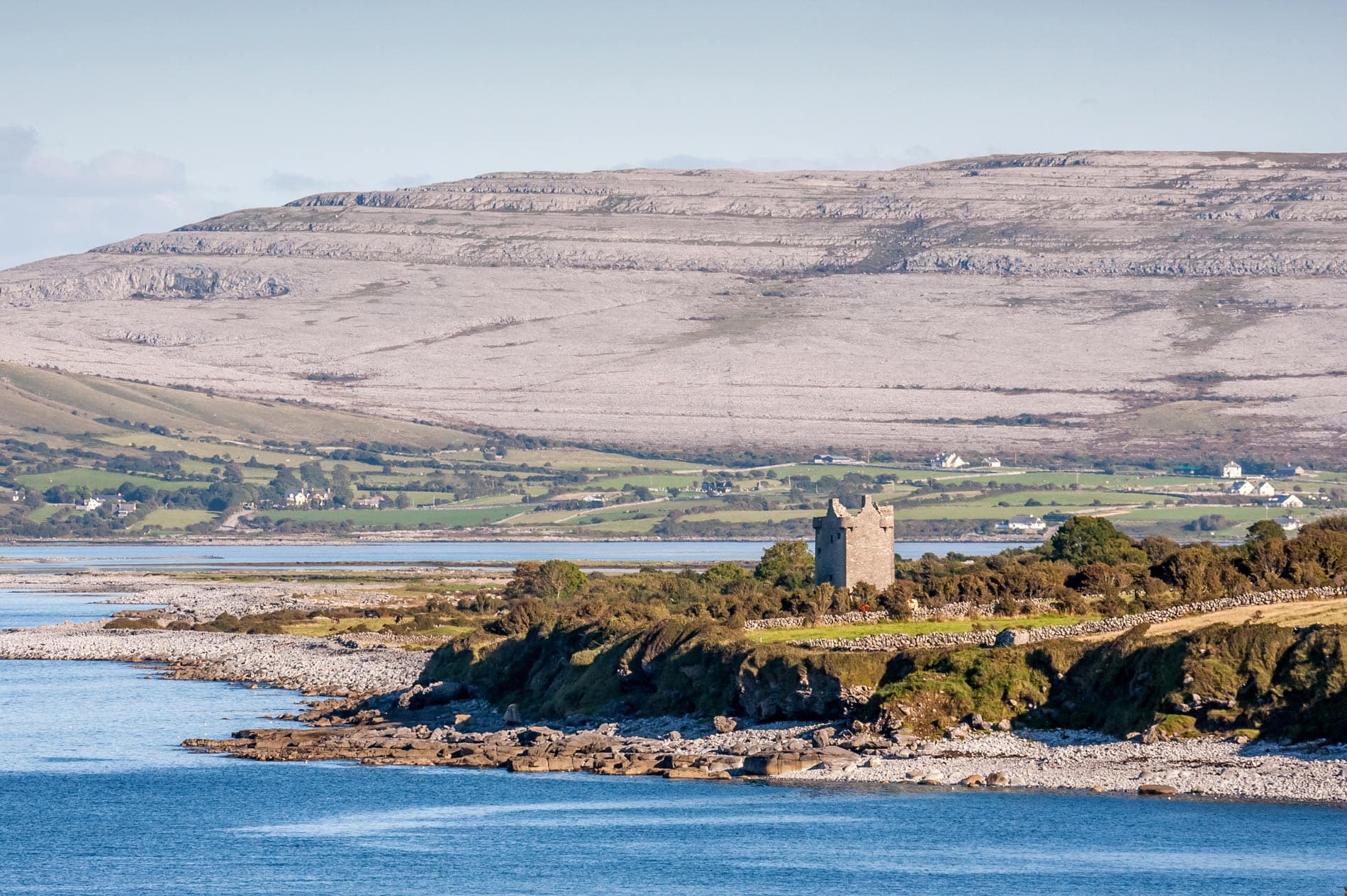
Immediately inland, and completely different in character — a vast expanse of bare limestone pavement, with Arctic, Mediterranean and Alpine plants growing side by side in the cracks. Poulnabrone, a Neolithic portal tomb, stands in an open field a short walk from the roadside. Our Burren tour covers this area in more detail.
Doolin
A small coastal village north of the cliffs known for traditional music, and the departure point for boats to the Aran Islands and for cruises that view the cliffs from sea level.
The coast road north
Continuing north along the Clare coast towards Ballyvaughan gives you the Burren meeting the sea, and it is a far more interesting return leg than retracing the inland route.
Visiting with children
The cliffs work well with children provided the group stays on the surfaced paths and inside the protective walls. The drop is sheer and unfenced in places beyond the designated route, so this is one site where staying on the path genuinely matters.
The long drive is usually the harder part of the day for younger children. Breaking the journey with a proper stop rather than pushing straight through makes a significant difference.
Is a private taxi tour suitable?
For this particular trip, the argument for a private driver is stronger than usual — mostly because of the return leg. Six hours of driving in a day is tiring, and doing it yourself after a windy afternoon on the clifftop is where most people find the day catches up with them.
A private tour also lets you leave when the light is right rather than when a coach is scheduled, and add the Burren or Doolin without renegotiating the day. If that suits how you travel, the Cliffs of Moher private tour is the version of this route we run most often, and Dublin Airport transfers can be arranged around it if you are arriving or departing the same week.
Plan your journey
Tell us your dates and who is travelling, and we will put together a route with realistic timings — including whether the day is better spent on the cliffs alone or split with the Burren. Request a quote and we will come back to you directly.
Frequently Asked Questions
The cliffs are on the west coast in County Clare, roughly a three-hour drive from Dublin depending on the route taken and conditions on the day. It is close to a coast-to-coast crossing of the country.
Early morning and late afternoon are generally quieter than the middle of the day, when coach arrivals are at their heaviest. The cliffs face west, so afternoon and evening light tends to be the most rewarding for photographs.
Sometimes, and sometimes not. Low cloud and sea mist can reduce visibility to very little, and strong winds may mean parts of the paths are closed for safety. Conditions can also change within an hour, so it is worth checking the forecast on the morning of travel and keeping the plan flexible.
The main paths near the visitor centre are surfaced and the centre itself is built into the hillside with accessible facilities. Sections of the wider cliff walk are uneven and exposed. If accessibility matters for your group, check the current arrangements with the visitor centre before you travel.