Ireland is an easy country to visit and a surprisingly easy one to misjudge. It is small on the map, English-speaking and well connected — which leads a lot of first-time visitors to plan far more than the roads or the daylight will allow.
Here is the practical information that tends to matter most on a first trip.
Overview
This guide covers currency, the border, weather, driving, distances, money and the single most common planning mistake. None of it is complicated — but knowing it in advance saves a surprising amount of friction.
Two jurisdictions, one island
This is the point most often missed. The island contains two separate jurisdictions: the Republic of Ireland, and Northern Ireland, which is part of the United Kingdom.
| Republic of Ireland | Northern Ireland | |
|---|---|---|
| Currency | Euro (€) | Pound sterling (£) |
| Road distances | Kilometres | Miles |
| Emergency number | 112 or 999 | 999 or 112 |
| Examples | Dublin, Galway, Cork, Killarney | Belfast, Giant's Causeway, Derry |
There are no routine border checks between the two, and you may cross without noticing beyond the road signs changing. But if you are visiting the Giant's Causeway from Dublin, you are changing country and currency for the day.
Weather and what to pack
The Irish climate is mild and changeable. Temperatures rarely reach extremes in either direction, but conditions can shift several times within a single day, particularly on the west coast.
- A genuinely waterproof jacket — more useful than an umbrella, which the Atlantic wind will destroy.
- Layers rather than one heavy coat.
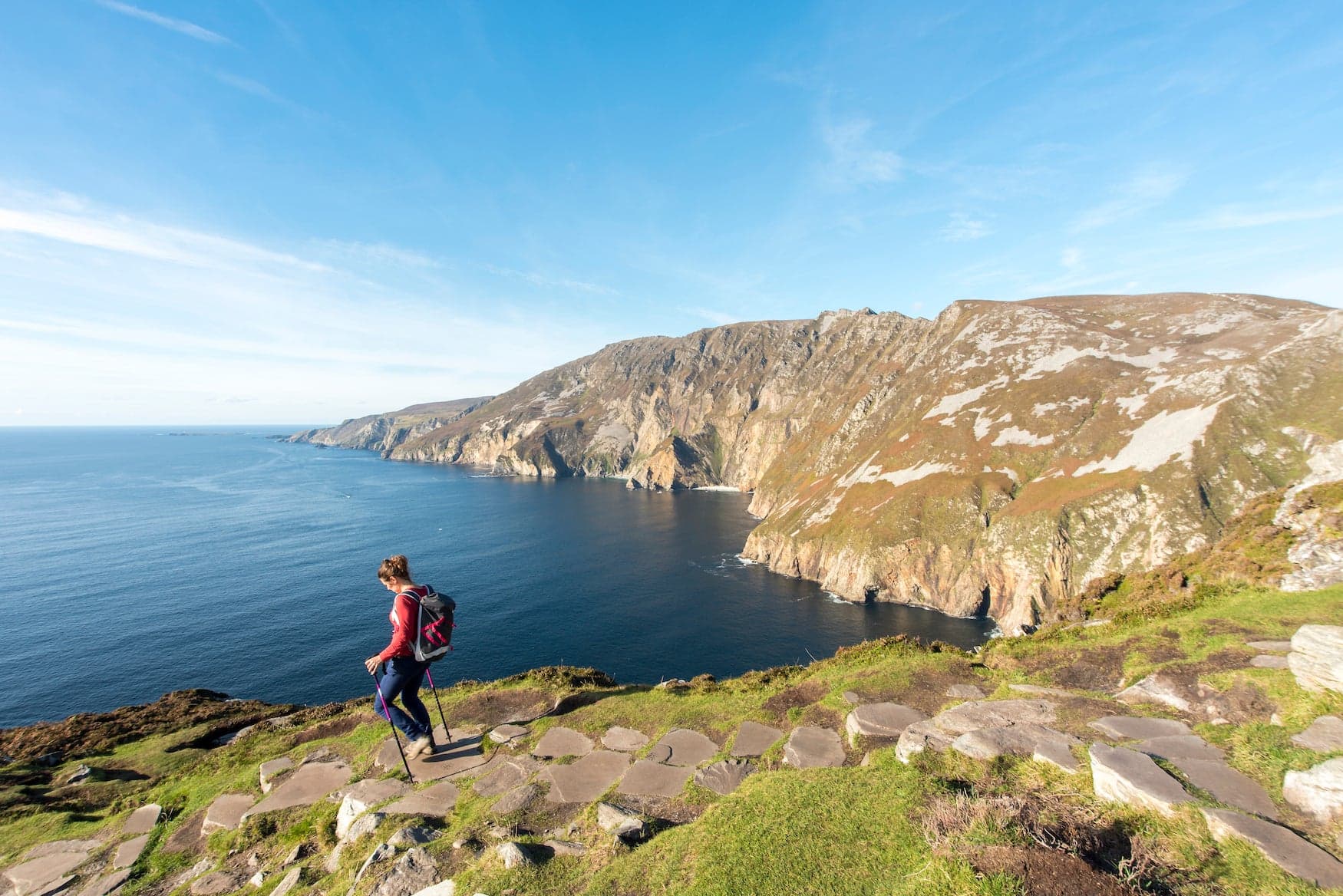
- Comfortable waterproof footwear if you plan any walking on coastal or mountain paths.
- Sunglasses, which visitors consistently fail to pack and consistently need.
There is no bad weather, only unsuitable clothing — a saying you will hear repeatedly, usually from someone who is entirely dry.
Distances take longer than you think
Ireland is compact, and the motorway network radiating from Dublin is genuinely fast. The moment you leave it, that changes.
Rural and coastal roads are often narrow, winding and bounded by stone walls or hedgerows. A distance that looks like forty minutes on a map can take twice that in practice — and on scenic routes like the Ring of Kerry or the Connemara bog roads, that slower pace is a large part of the point.
Driving in Ireland
Traffic drives on the left in both jurisdictions. If you are not used to that, the adjustment usually takes a day or so — and the hardest moments tend to be junctions, roundabouts and the first time you meet a bus on a narrow road.
- Speed limits are posted in kilometres per hour in the Republic and miles per hour in Northern Ireland.
- Many rural roads have no hard shoulder and limited passing places.
- Parking in city centres is limited and generally paid; park-and-ride options exist around larger cities.
- Motorway tolls apply on some routes, including around Dublin.
Money and everyday etiquette
- Tipping is appreciated but not obligatory — commonly 10 to 15 per cent in restaurants where service is not included. Tipping at the bar for drinks is not usual.
- Pubs are social spaces rather than only drinking venues; many serve food and host music, and children are often welcome earlier in the day.
- Conversation with strangers is normal and not regarded as intrusive. Directions offered in conversational form may include landmarks rather than road numbers.
Getting around without driving
You do not need a car for a good trip to Ireland. Dublin, Galway, Cork and Belfast are compact and walkable, intercity rail and coach links between them are reasonable, and the cities themselves reward slow exploration.
The gap appears when you want to reach the coastline, the mountains and the villages between them — which is where public transport thins out considerably. That is the point at which most visitors either hire a car or book a driver.
Is a private taxi tour suitable?
For a first trip, a private driver tends to be most useful in two situations: on long cross-country days where you would otherwise arrive tired, and on narrow scenic routes where the driver would miss the scenery.
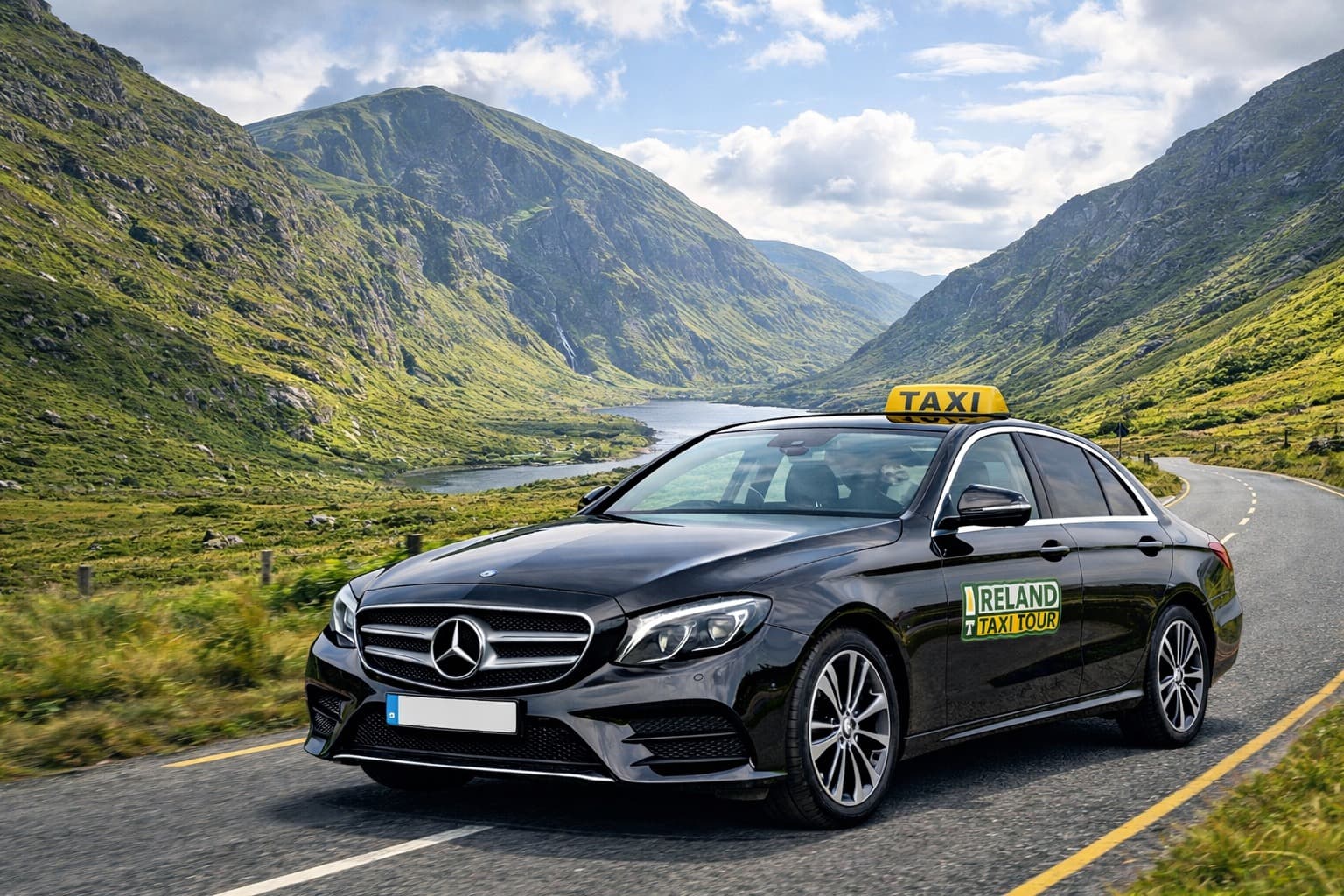
It is also worth considering if you are not comfortable driving on the left, if you are travelling with children or older relatives, or if you simply have few days and want to use them well. Ireland Taxi Tour runs private tours, day tours from Dublin and airport transfers across both jurisdictions, so a trip crossing the border does not need to be split between providers.
Plan your journey
If you are still deciding between regions, our destinations guide breaks the country down city by city, and we are happy to advise on what fits the days you have.
Frequently Asked Questions
Yes. The Republic of Ireland uses the euro and Northern Ireland uses pound sterling. If your trip crosses the border — for example to visit the Giant's Causeway — you will want access to both, though card payment is widely accepted on either side.
There are no routine passport or customs checks when crossing between the Republic and Northern Ireland by road. In practice the change is marked by road signs switching from kilometres to miles and by the currency in use.
May, June and September tend to offer the best balance of daylight, weather and manageable visitor numbers. July and August are warmest and busiest. Winter is quiet and atmospheric, but daylight is short and some seasonal attractions close.
Not necessarily. Dublin, Galway, Cork and Belfast are walkable and well connected by public transport. A car — or a driver — becomes valuable when you want to reach rural coastline, mountain routes and smaller villages, which is where much of the country's appeal lies.
Tipping is appreciated rather than obligatory. Around 10 to 15 per cent in a restaurant if service has not already been added is customary. In pubs, tipping for drinks at the bar is not the norm.